OnlyFans billing changes depending on where you live, even when the creator sets a single price in US dollars. Subscribers in different countries see different currencies, pay through different rails, and get charged at different moments on the calendar. BestOnlyFans tracks these mechanics because the gap between the advertised price and the final debit is almost always geographic. This guide explains the platform logic behind regional price display, conversion handling, payment method limits, renewal timing, and tax rules.
The core principle is simple: creators set one number, and the platform plus your bank decide how that number reaches you. BestOnlyFans refreshes its rankings every month.
How OnlyFans Displays Prices by Region
Creators set subscription prices in US dollars, and the platform stores that figure as the canonical amount. Paid subscriptions run from $4.99 at the minimum to $49.99 at the maximum, with most pages sitting in the $4.99-$15 band and averages clustering around $5-$10. Free pages set the price to $0 and earn through pay-per-view messages and tips instead. No paid base price exists below $4.99, though promotional first months can dip lower.
The platform may show the raw USD figure, a converted local-currency estimate, or both side by side. Conversion, when it happens, uses a rate that refreshes on a schedule rather than in real time, so the number on the page can drift from the interbank rate you find elsewhere.
- Raw USD display: the creator’s dollar price appears unchanged, and your bank performs the conversion when the charge settles.
- Platform-converted display: the platform shows an estimated local figure using its own scheduled rate, which may not match your bank’s rate on settlement day.
- Blended display: both figures appear together, usually with the USD amount marked as the authoritative one.
One practical consequence: two subscribers in the same city can see slightly different local prices if their accounts were created at different times or use different card issuers.
Currency Conversion and Hidden Fees
The platform may convert at checkout, and your card issuer may convert again if the transaction settles in a foreign currency. Each conversion carries a spread, and stacked spreads are the most common reason a charge lands above the figure you calculated.
Card issuers commonly apply an international transaction fee in the range of one to three percent when the settlement currency differs from your card’s home currency. Some banks also offer dynamic currency conversion at the point of sale, which converts the amount into your home currency immediately at a rate the bank sets.
| Cost Component | Controlled By | Typical Range |
|---|---|---|
| Platform exchange spread | OnlyFans checkout | Applied only when a converted local price is shown |
| Card issuer international fee | Your bank | Roughly 1-3 percent of the transaction |
| Dynamic currency conversion | Bank or payment processor | Varies; usually above network rates |
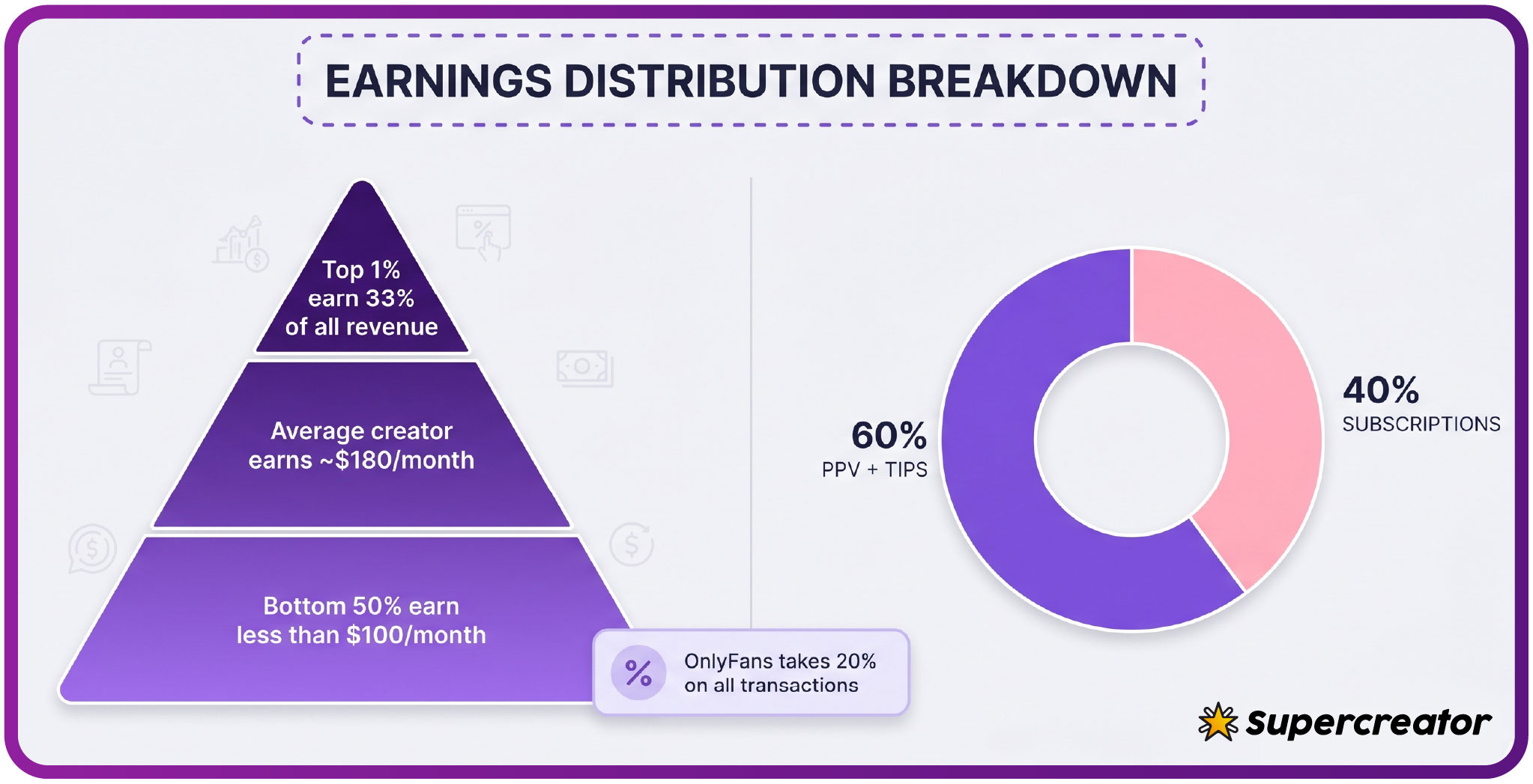
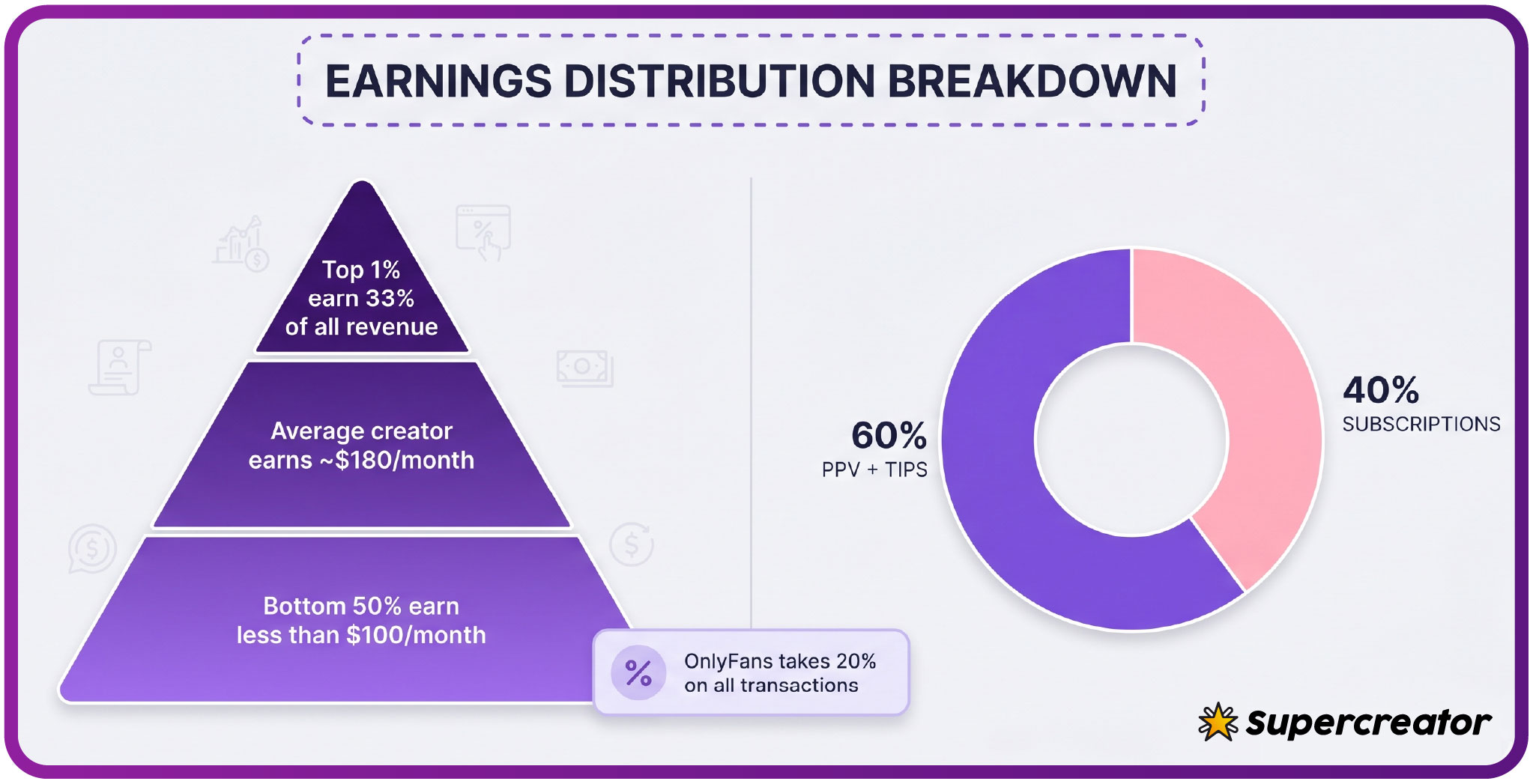
OnlyFans takes a 20% fee on everything, and the creator keeps 80% — that split happens before your payment method is involved, so it does not change what you are charged.
To estimate your true cost, work through the components in order.
- Note the listed USD price on the subscription button.
- Identify which party converts: check whether checkout shows your home currency or dollars.
- Add your card issuer’s international fee if your card bills in a different currency.
- Account for daily rate movement between the day you check and the day the charge settles.
- Confirm the real number against the $0.10 card verification hold, which is refunded within days.
Tip: the $0.10 verification hold is the cheapest exchange-rate probe available. Compare the hold amount in your statement to the expected conversion, and you will know your issuer’s effective markup before committing to a full subscription.
Payment Method Availability by Country
Accepted payment methods vary by region, and the variation is driven by the card networks and wallet providers rather than by the platform itself. A card that works without friction in one country may be declined outright in another, and the failure often looks like a generic payment error rather than a regional restriction.
Prepaid cards are a frequent trouble spot. Some issuers block recurring international charges by default, which breaks auto-renew even when the initial payment succeeds. If a prepaid card fails on renewal but worked on signup, the block is usually on the issuer’s side.

- Card type restrictions: some debit and prepaid products reject cross-border recurring billing.
- Wallet unavailability: digital wallet support differs by market, and some wallets simply do not appear as options.
- Prepaid rejection triggers: recurring-charge blocks and low balance thresholds cause mid-cycle failures.
- Backup method recommendation: keep a second card on file from a different issuer to avoid losing access at renewal.
Paid chat commonly runs $3-$5 per message, and PPV messages unlock up to $50, so a failed payment method blocks the higher-value interactions too.
Time Zone Effects on Billing Cycles
A renewal set at midnight UTC lands in the previous evening for subscribers several hours behind, and in the following morning for those ahead.
Calendar months compound the confusion. A subscription started on January 31 renews on a date that does not exist in shorter months, so the system picks the nearest valid day, which can look like an early or late charge depending on the month.
- Midnight UTC renewal showing as the prior evening in western time zones.
- Monthly budget resets that do not align with your local salary or statement cycle.
- Promotional period edges calculated in UTC, making the final discounted day end sooner than expected locally.
- Support ticket timestamps recorded in UTC and read as local time, creating apparent response delays.
- Creator posting schedules misread across zones, so content looks stale when it is only hours old.
There is one more timing rule worth knowing: when a creator raises the price, auto-renew stops. Existing access lasts until the paid period ends, so the change takes effect at your next manual renewal rather than immediately.
Regional Tax and Regulatory Surcharges
Some jurisdictions require value-added tax on digital services, some apply sales tax at the state level, and others have introduced dedicated digital services taxes.
In many VAT jurisdictions, listed prices must already include the tax, so the figure you see is the figure you pay at checkout, with the breakdown shown afterward. In other markets, tax is added at checkout on top of the listed amount, which makes the final charge higher than the subscription button suggested.
| Region Type | Tax Name | Display Method | Added to Listed Price? |
|---|---|---|---|
| VAT jurisdictions | Value-added tax on digital services | Usually inclusive in listed price | No, generally already included |
| US states with applicable rules | State sales tax on digital goods | Often added at checkout | Yes, in many cases |
| Markets with digital services taxes | Local digital services levy | Shown in the post-purchase breakdown | Varies by jurisdiction |
Because the rules change and the platform does not always surface a line-item breakdown before payment, the safest approach is to check your first statement after subscribing and treat that as your baseline for future renewals.
Access Timing for Geo-Distributed Content Drops
Creators post on their own schedules, and those schedules are anchored to their local day. If you subscribe from a time zone far from the creator’s, the content you see as “new” may have been posted during your night, and the drip you expect in your evening may not arrive until the following morning.
Nothing is region-locked on the platform — a subscription grants the same library regardless of where you are — but the moment a new item appears in your feed shifts with the time difference.
Starting a monthly subscription in your morning means the renewal lands in your morning a month later; starting it late at night pushes the renewal into the small hours. If you want charges to appear at a predictable point in your statement cycle, subscribe at that same point in the day.
Ranking sites exist largely because the platform has no built-in discovery feed, so international subscribers rely on third-party comparisons to find pages worth the time-zone mismatch. If you want a starting point, this comparison of the best onlyfans cheap pages covers how pricing tiers and posting frequency line up across regions.
Verifying Your Regional Price Before Paying
The verification hold is the cleanest tool: it costs $0.10, appears on your statement within days, and is refunded shortly after.
Work through this sequence the first time you subscribe from a new country or with a new card.
- Start a free or low-cost subscription to trigger the small verification hold.
- Compare the hold amount in your home currency against the expected conversion at the current rate.
- Check your wallet or card app for a pending-charge preview, which often shows the converted figure before settlement.
- Proceed if the variance is within your tolerance, or switch cards if the spread looks wide.
A second habit helps over time: bookmark the exchange rate on the day you subscribe and check it again before renewal. Because rates refresh on a schedule rather than continuously, a subscription that cost one amount this month can shift by a small margin next month even when the USD price is unchanged.
BestOnlyFans treats these geographic variables as part of the ranking picture, since a page that looks affordable at $4.99 can cost meaningfully more once conversion and issuer fees land. Pairing a USD-denominated card with a subscription started at a consistent time of day keeps the total predictable.

FAQ
Why does my OnlyFans charge differ slightly from the listed price?
Three things move the number: display rounding, the difference between the platform’s scheduled exchange rate and your bank’s settlement rate, and any international transaction fee your card issuer applies.
Can I force OnlyFans to bill me in USD instead of local currency?
Not through a setting. Using a card denominated in USD is the most reliable way to keep the charge in dollars, though your issuer may still apply a cross-border fee.
Do promotional first-month prices also get currency converted?
Yes. A promotional rate such as a $3 first month is stored in USD like any other price and converts the same way. Remember that promotional pricing applies to the first period only, and base prices never fall below $4.99.
Why was my renewal charged a day earlier than my local calendar shows?
Renewal timestamps are stored in UTC. Depending on your offset, midnight UTC can fall on the previous evening or the next morning in your local time. Shorter months also shift the renewal date when your original signup day does not exist in that month.